
TMJ & occlusion
Understand symptoms before suggesting a splint.
Jaw pain and temporomandibular disorders have many causes. Assessment aims to clarify the situation and the most suitable direction.
Book an appointment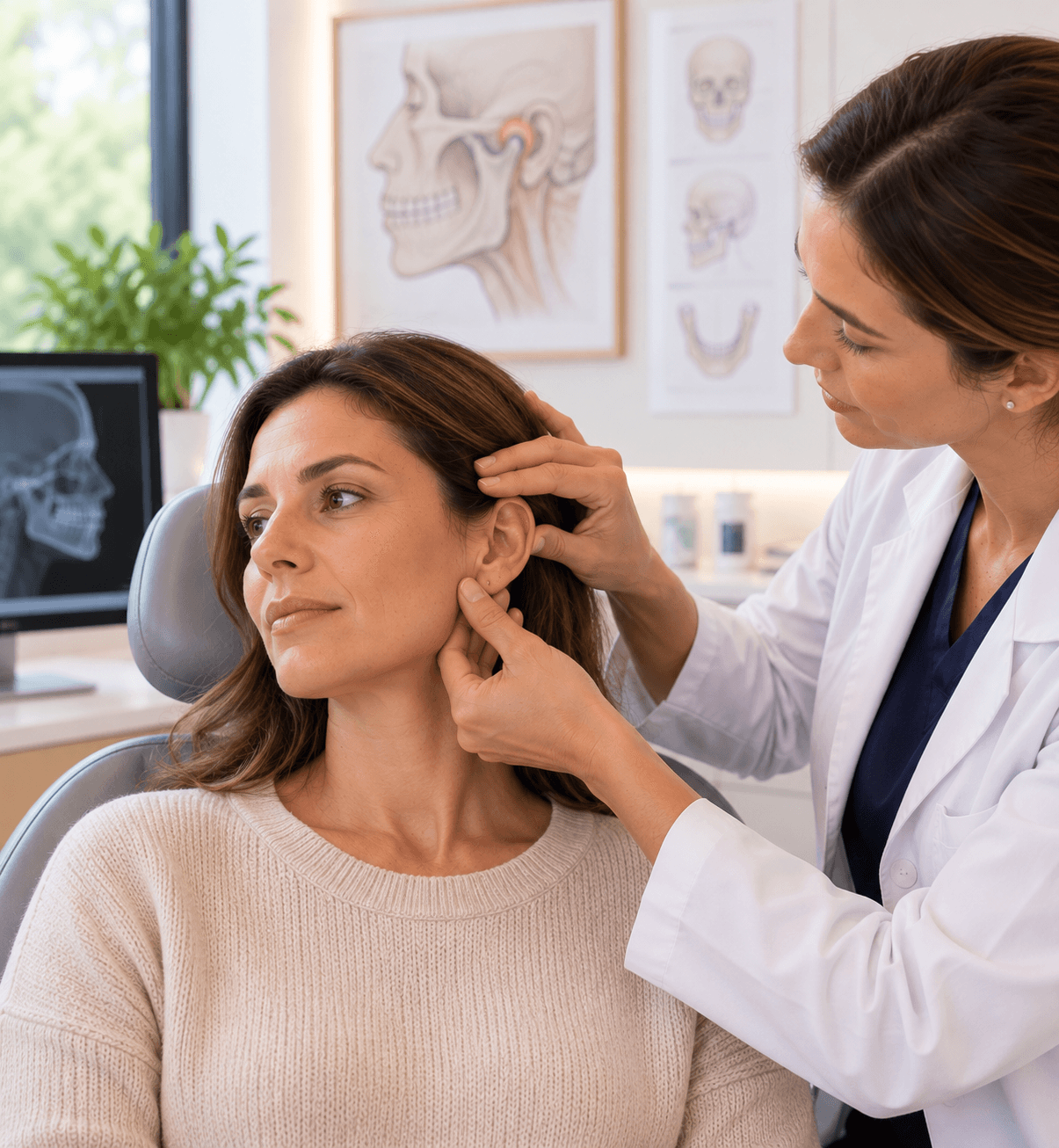
Listen
Symptoms in context
Jaw pain, muscle fatigue, joint sounds, headaches, locking, and limited opening can have different causes and do not automatically indicate the same treatment. Cristina asks when symptoms began, what makes them better or worse, and how they affect eating, speaking, sleep, or daily life.
Previous trauma, dental treatment, habits, health conditions, and earlier investigations can all be relevant. This history helps identify warning signs and whether another professional should be involved.
- Symptom pattern and functional impact
- Previous care, records, and relevant health history
- Referral when the presentation falls outside orthodontic care

Assess
Bite, joints, muscles, and movement
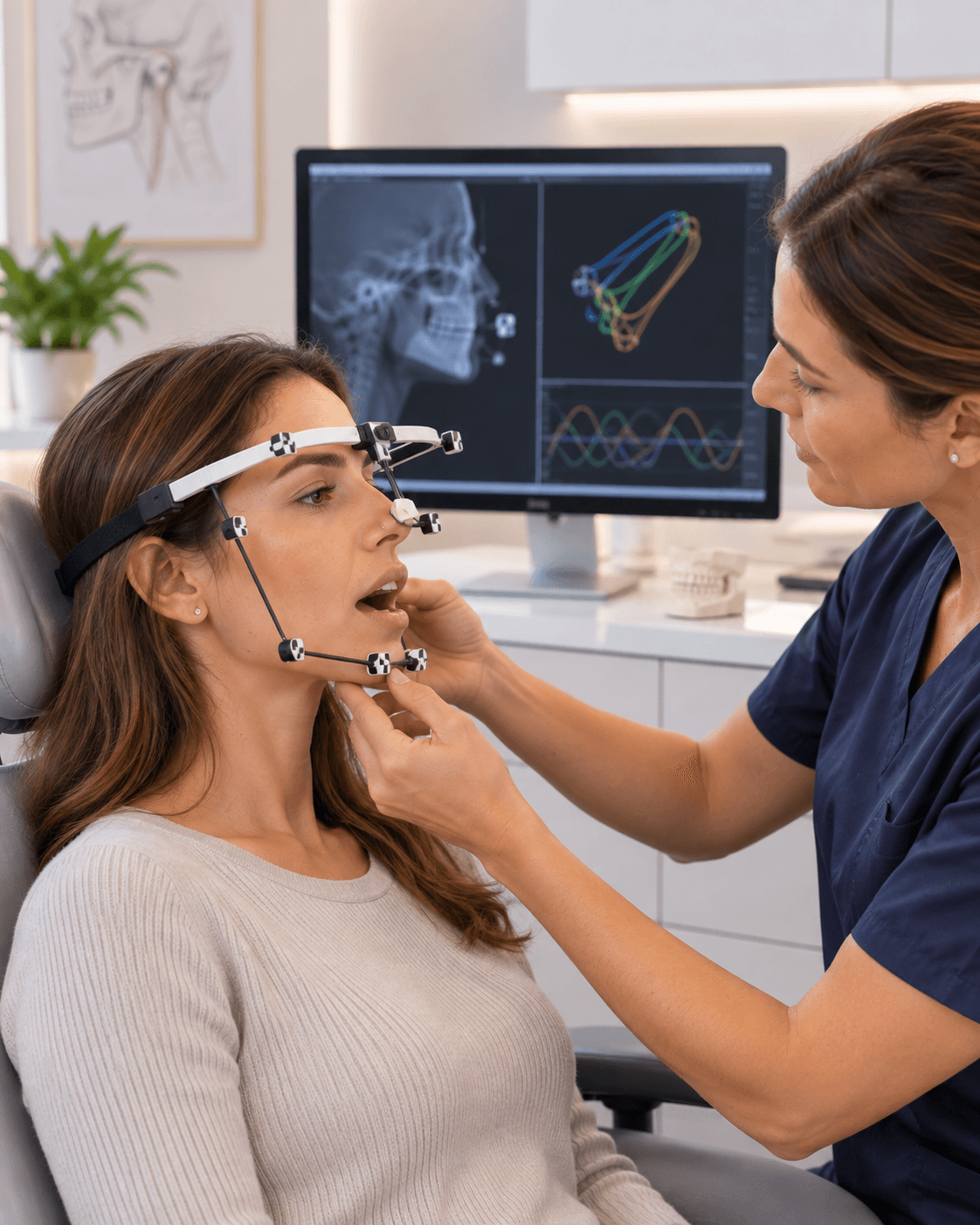
Clinical examination considers jaw opening, movement pattern, joint and muscle tenderness, and the way the teeth meet. The goal is to relate the symptoms to findings without assuming that the bite alone is the cause.
When it would answer a specific question, MODJAW 4D may record selected jaw movements and complement the examination. Digital data supports clinical judgement; it does not diagnose pain by itself.
- Movement and opening assessed clinically
- Bite considered as one part of the picture
- Digital analysis used only when it adds useful information
TMJ and occlusal splints
TMJ assessment and occlusal splints
Care is chosen according to the diagnosis and should remain proportionate. Initial management may include explanation, monitoring, habit awareness, or coordination with a doctor, physiotherapist, pain clinician, or another dental professional.
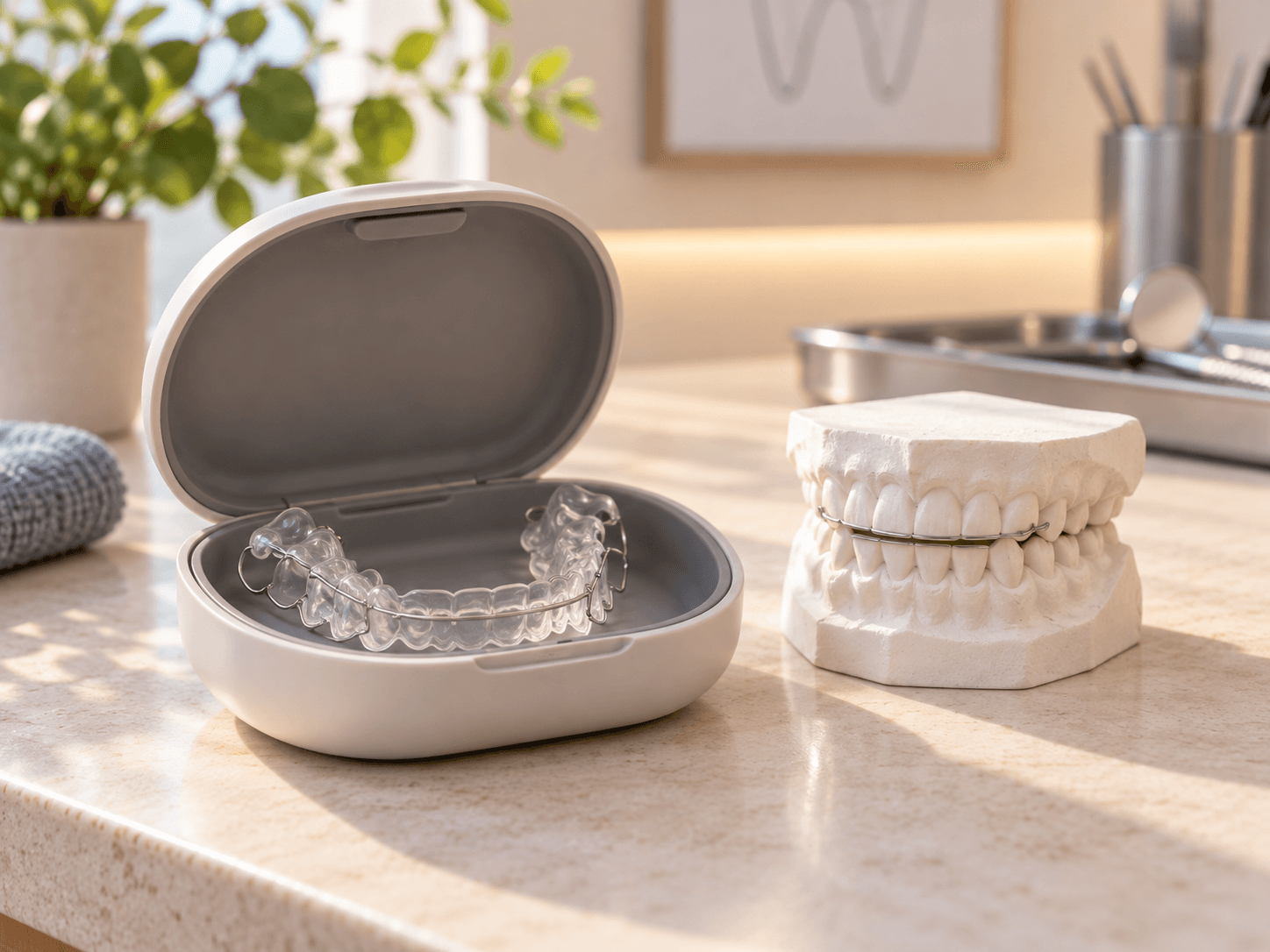
A reversible occlusal splint may be considered for selected situations, but it is not a universal solution for jaw pain and should not be designed to permanently change the bite. Cristina explains its purpose, wear, review, and when to stop and seek advice if symptoms worsen.
- Conservative, reversible options considered first
- A splint only when there is a clear indication
- Persistent or complex symptoms referred appropriately
Frequently asked questions
What patients ask most often.
General answers, to be refined around your diagnosis.
01Will a splint resolve every TMJ problem?+
No. It is relevant only in selected situations and does not replace a complete assessment.
02Should I bring previous records?+
Yes, if available. They can help with history while not replacing the clinical examination.
The next step
Let’s start by understanding your situation.
A first consultation is time to take stock, answer your questions, and explain the options that may be relevant.