
Snoring & sleep apnoea
An oral option within coordinated medical care.
Selected patients may benefit from a mandibular advancement device such as SomnoMed. Indication belongs within medical sleep assessment.
Book an appointment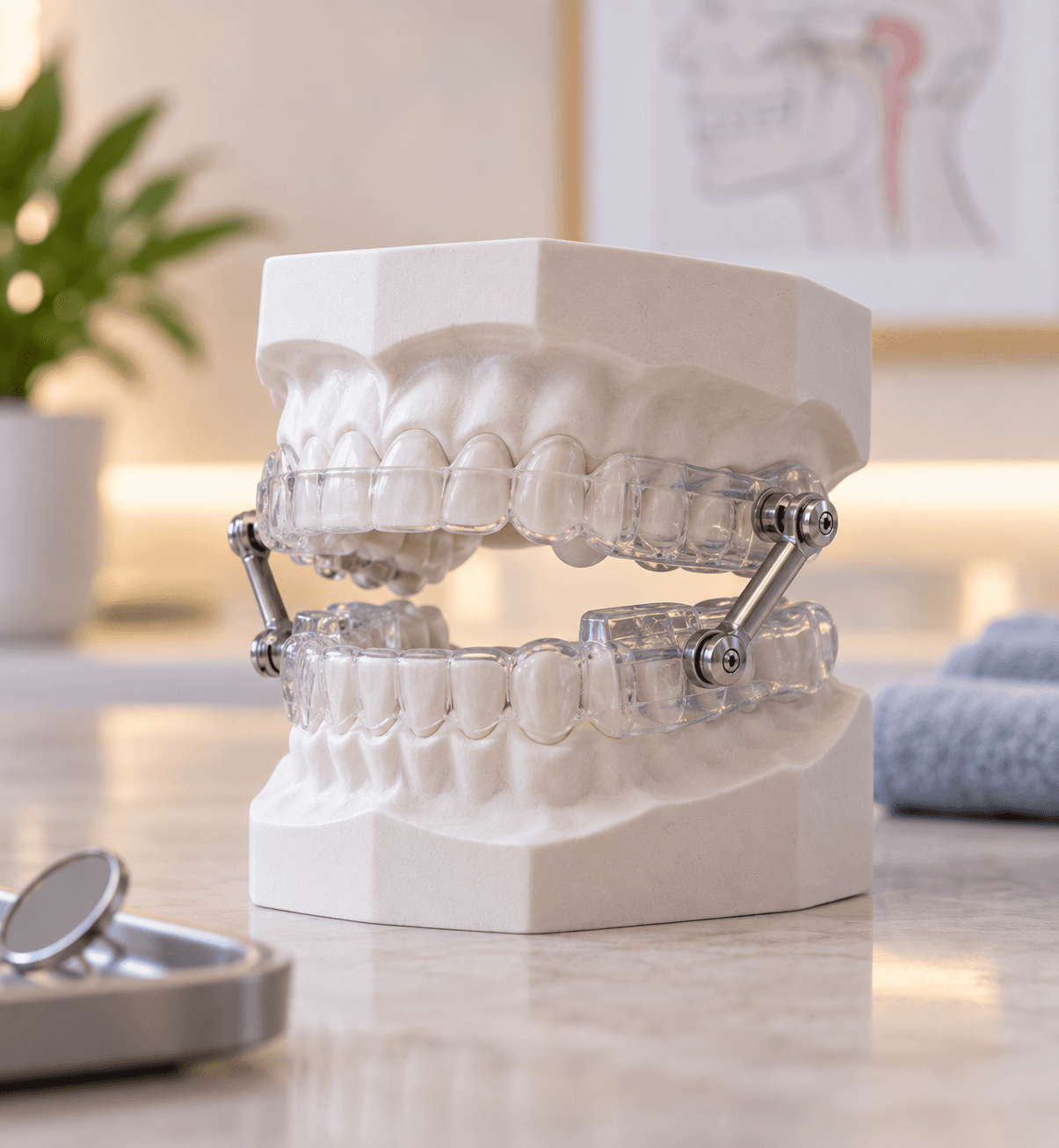
Coordinated medical care
Sleep-apnoea appliances begin with a medical diagnosis
Snoring can occur without obstructive sleep apnoea, and symptoms alone cannot establish the diagnosis or its severity. Assessment by a sleep physician—and sleep testing when indicated—comes before deciding whether an oral appliance is appropriate.
Cristina reviews the medical recommendation alongside dental health, the bite, jaw movement, and whether the teeth can safely support a device. The consultation complements medical sleep care; it does not replace it.
- Medical diagnosis and severity considered first
- Dental suitability assessed before an appliance
- Alternatives discussed with the sleep physician

Mandibular advancement device
A custom, adjustable oral appliance
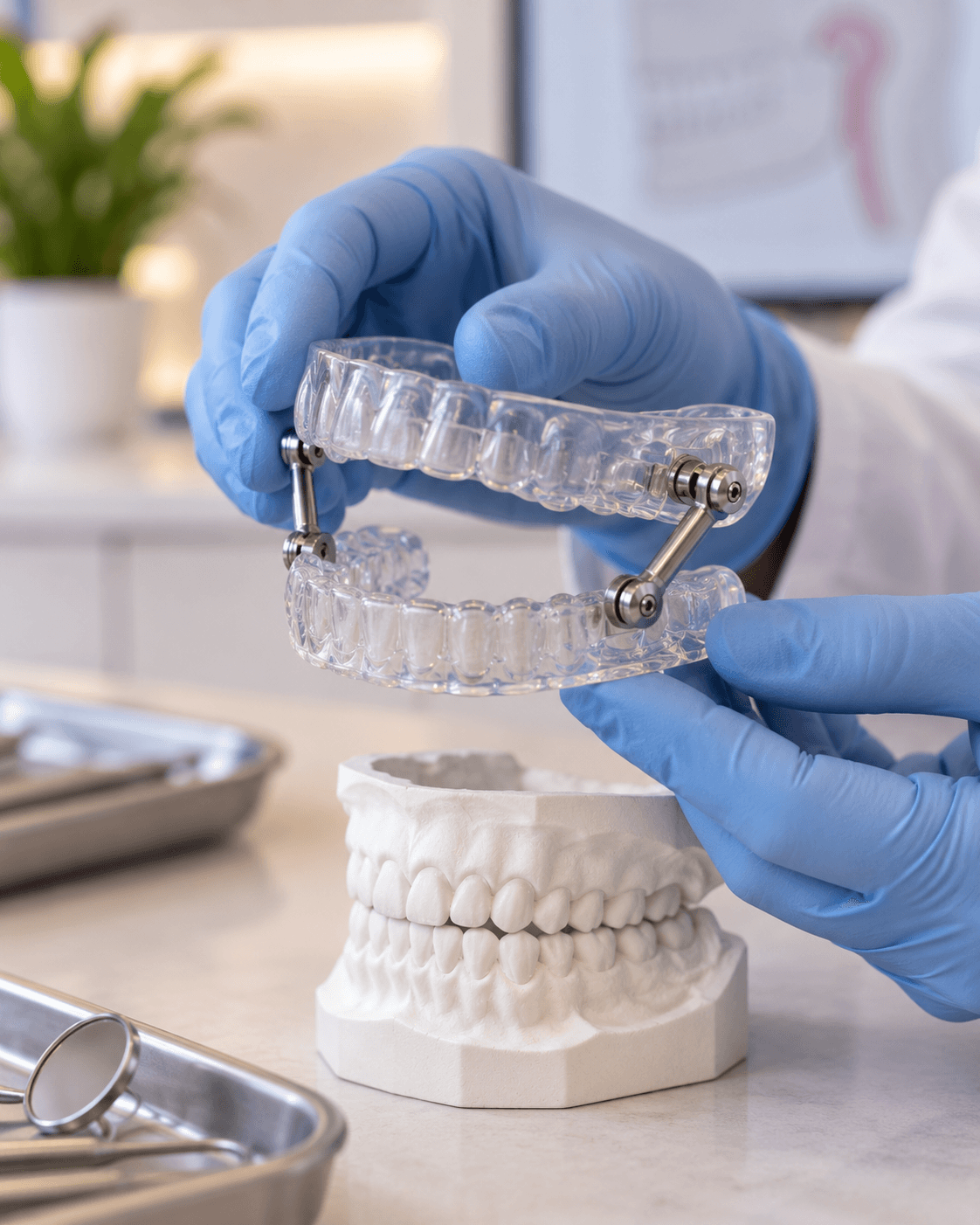
A mandibular advancement device holds the lower jaw in a planned forward position during sleep, which can help keep the airway more open in selected adults. The appliance is made to fit the teeth and is adjusted progressively rather than set to a single position for everyone.
It is not a universal substitute for CPAP. Suitability depends on the medical diagnosis, severity, treatment preference or tolerance, dental conditions, and the recommendation of the clinicians coordinating care.
- Custom-made for the individual dentition
- Advanced gradually with comfort and function monitored
- Used within the medical treatment plan
Follow-up
Comfort, effectiveness, and coordination
Early reviews assess comfort, appliance fit, jaw symptoms, tooth sensitivity, bite changes, and whether the device can be worn consistently. Adjustments aim to balance the intended airway effect with dental and jaw comfort.
Dental review alone cannot confirm that sleep apnoea is controlled. Follow-up with the sleep physician, including repeat sleep testing when recommended, is important to evaluate effectiveness and decide whether the plan should continue or change.
- Dental side effects and fit monitored
- Effectiveness reviewed medically
- Periodic dental and sleep-clinic follow-up

Clinical pre-consultation
A clearer first step toward the right sleep consultation.
Choose the questionnaire that best matches your concern. You will see one question at a time and receive a clear next-step summary at the end.
Your answers remain on this device. Nothing is saved or sent to Ortheon Clinic.
Choose a questionnaire
You can complete either one or both. Allow about five minutes for both.
These are Ortheon Clinic pre-consultation questionnaires, not diagnostic tests. Only a medical assessment and, when indicated, a sleep study can diagnose or exclude obstructive sleep apnoea. Dental assessment determines whether an oral appliance may be suitable after medical evaluation.
Frequently asked questions
What patients ask most often.
General answers, to be refined around your diagnosis.
01Is this a universal alternative to CPAP?+
No. The choice depends on diagnosis, severity, medical recommendations, and the individual situation.
02Is the device custom made?+
Yes. When indicated, it is fitted to your teeth and reviewed clinically.
The next step
Let’s start by understanding your situation.
A first consultation is time to take stock, answer your questions, and explain the options that may be relevant.