
Retention & treatment support
Protect the result. Know what to do next.
Retention, review, and timely support are part of orthodontic care—not an afterthought once active tooth movement ends.
Book an appointment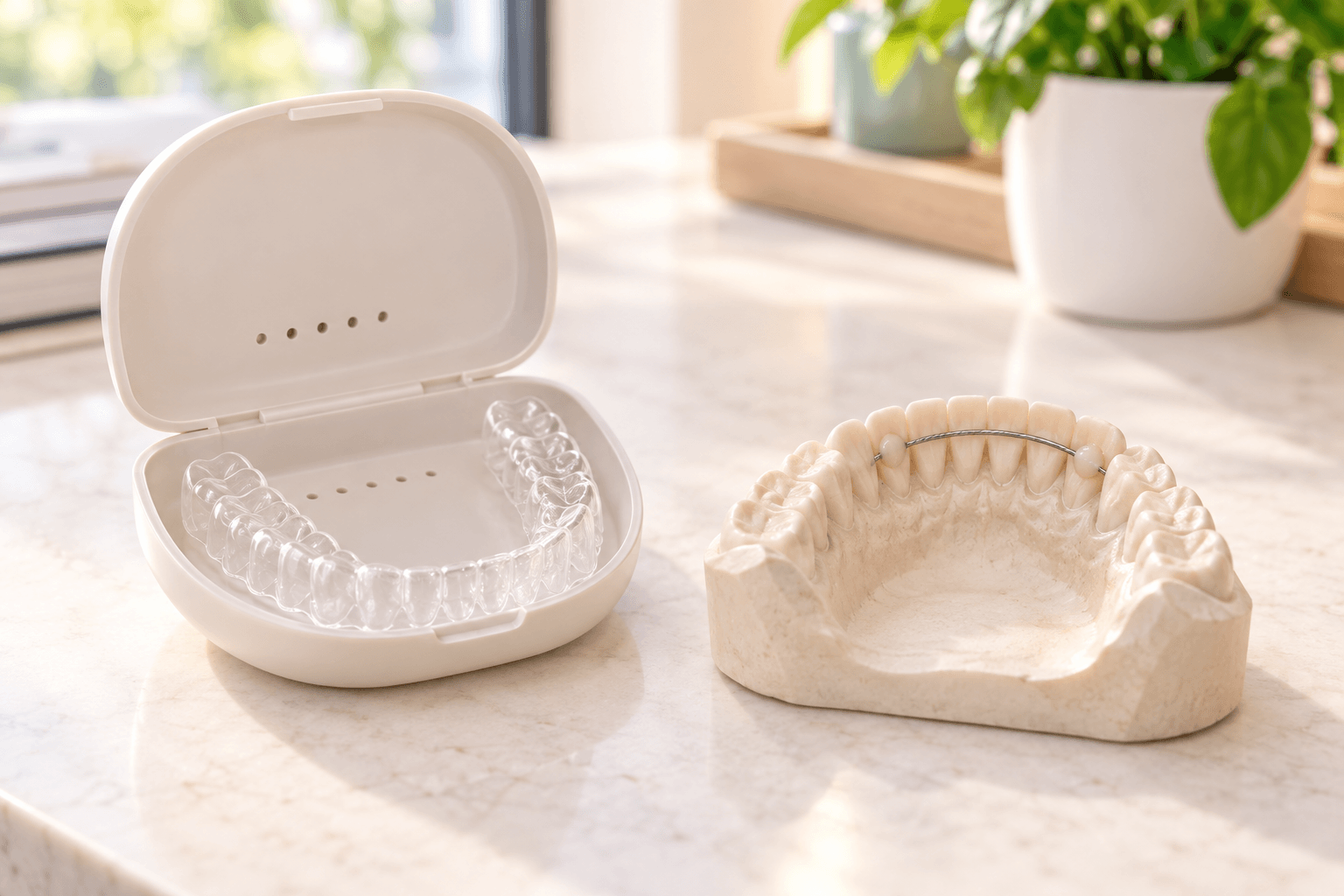
Retention and review
Retention and review after active treatment
Teeth can move after braces or aligners are removed while the surrounding tissues adapt, and some natural movement continues throughout life. A removable retainer, a bonded retainer, or a combination may therefore be recommended according to the finished result and individual risk of relapse.
Cristina provides a personal wear and review schedule. Retention visits check fit, hygiene, wear, and whether a bonded wire remains intact; they also allow small changes to be addressed before they become more established.
- A personal wear schedule
- Regular checks of fit and condition
- Long-term expectations explained clearly
At home
Simple care protects the appliance
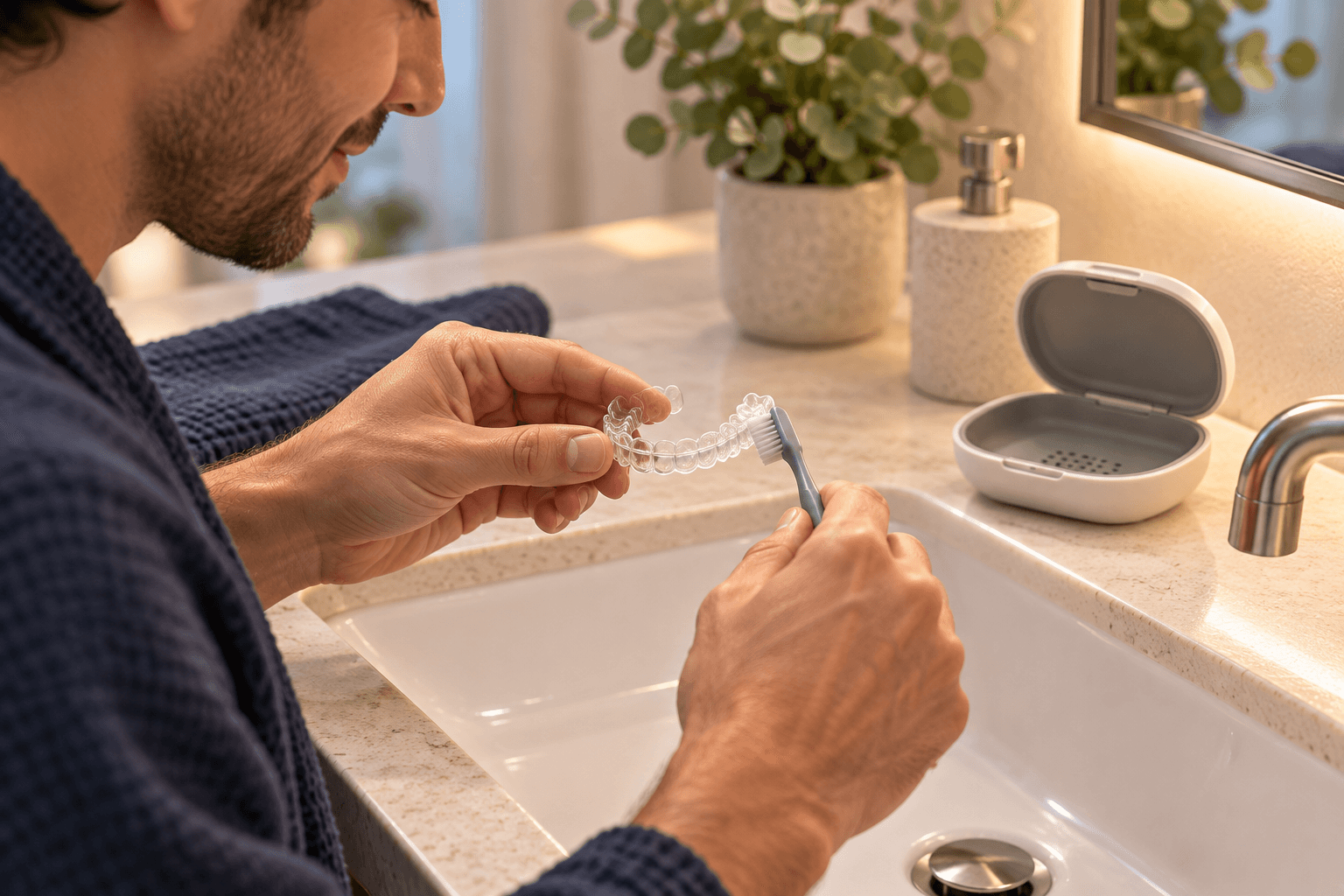
Removable retainers should be cleaned using the method recommended for their material and stored in their ventilated case when not worn. Excess heat, harsh products, pets, and wrapping a retainer in a tissue are common causes of damage or loss.
Bonded retainers require careful cleaning around the wire and regular checks that every attachment remains secure. If any retainer becomes sharp, cracked, unusually tight, or no longer seats fully, do not force it—contact the clinic for advice.
- Clean with the method recommended by the clinic
- Store removable retainers safely away from heat
- Report damage or a change in fit promptly
Orthodontic support
Orthodontic emergencies and second opinions
Most appliance problems are uncomfortable rather than dangerous, but the right response depends on what happened. A loose bracket, irritating wire, lost aligner, damaged retainer, or unexpected discomfort should be described to the clinic so Cristina can advise whether simple temporary care or an earlier visit is appropriate.
A second-opinion consultation is different: it reviews the diagnosis, records, objectives, and proposed alternatives so you can understand the reasoning, benefits, limitations, and likely sequence before deciding. Severe swelling, uncontrolled bleeding, major trauma, or difficulty breathing or swallowing requires urgent medical or dental care.
- Explain what happened, when, and what you feel
- Bring available records for a second opinion
- Use emergency services for severe or potentially dangerous symptoms

Frequently asked questions
What patients ask most often.
General answers, to be refined around your diagnosis.
01How long will I need to wear a retainer?+
The schedule depends on your treatment and stability. Cristina gives individual instructions and explains how long-term review will work.
02What should I do if my retainer no longer fits?+
Do not force it. Contact the clinic so the change can be assessed and the appropriate next step advised.
03What counts as an orthodontic emergency?+
Severe pain, significant swelling, trauma, or breathing or swallowing difficulty needs prompt professional assessment. For appliance problems, contact the clinic for tailored advice.
The next step
Let’s start by understanding your situation.
A first consultation is time to take stock, answer your questions, and explain the options that may be relevant.