
Fixed appliances
Precise, robust, and versatile.
Fixed appliances can guide many types of dental movement with regular specialist control.
Book an appointment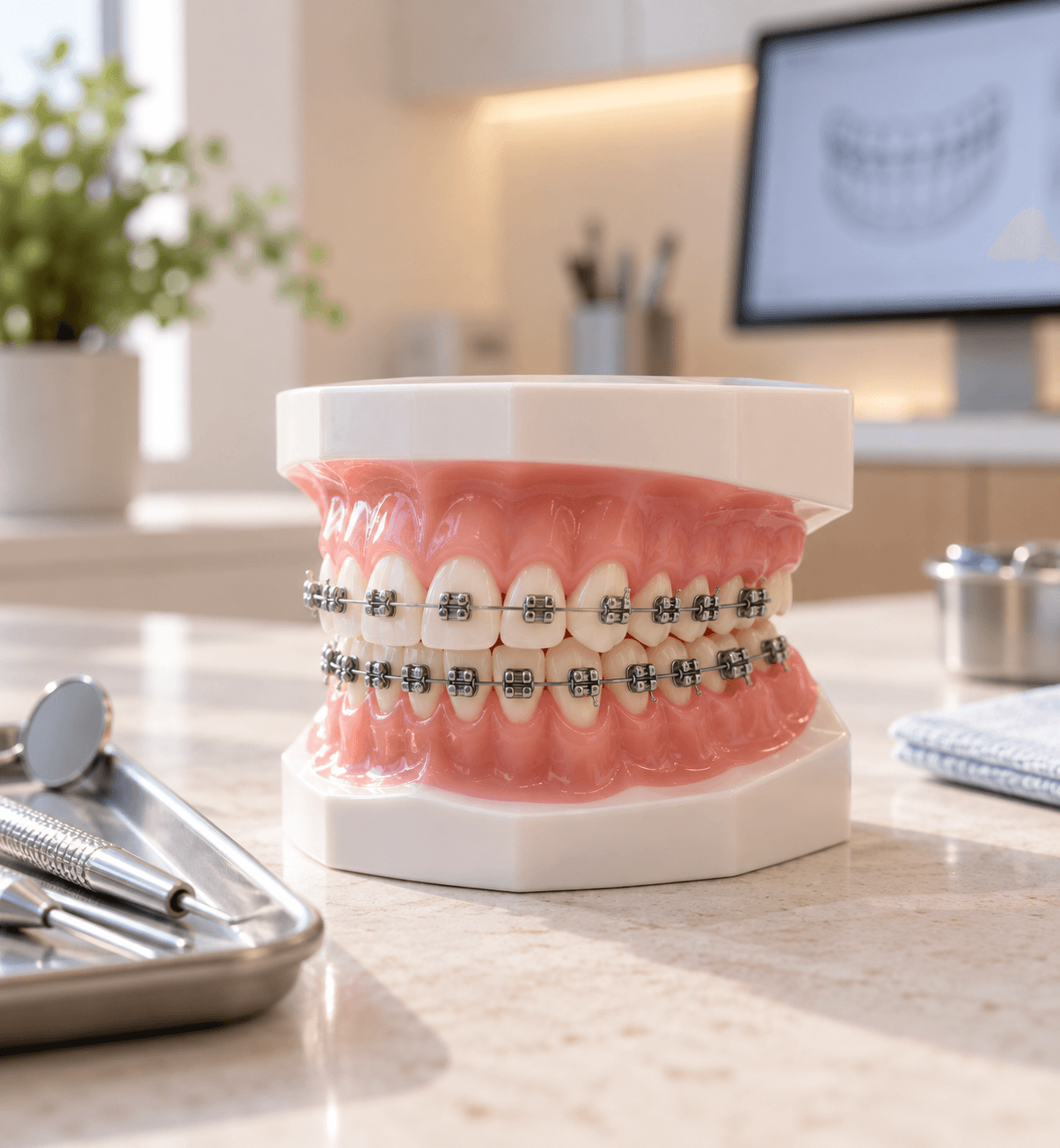
Fixed appliances
Fixed appliances for precise, continuous control
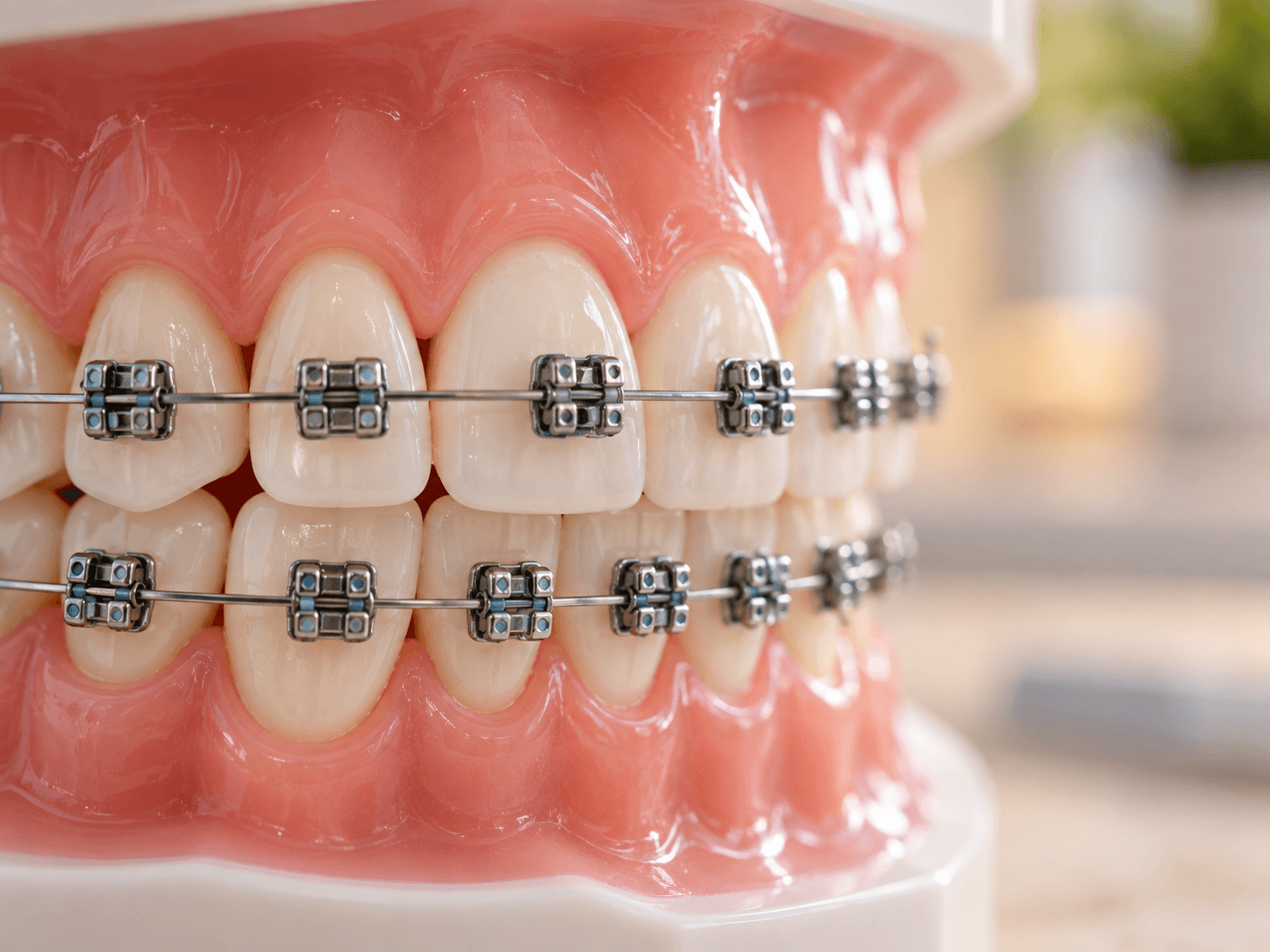
Brackets are attached to the teeth and connected by wires, allowing the orthodontist to guide movement throughout treatment. Because the appliance stays in place, it does not depend on remembering to insert it each day.
Fixed appliances can be useful for teenagers and adults and for a wide range of bite and alignment problems. The type of appliance and any additional components are selected from the diagnosis—not from appearance alone.
- Suitable for many types of movement
- Adjusted at planned clinical reviews
- Can be combined with elastics or other auxiliaries when indicated
Daily care
Hygiene, food, and appointments
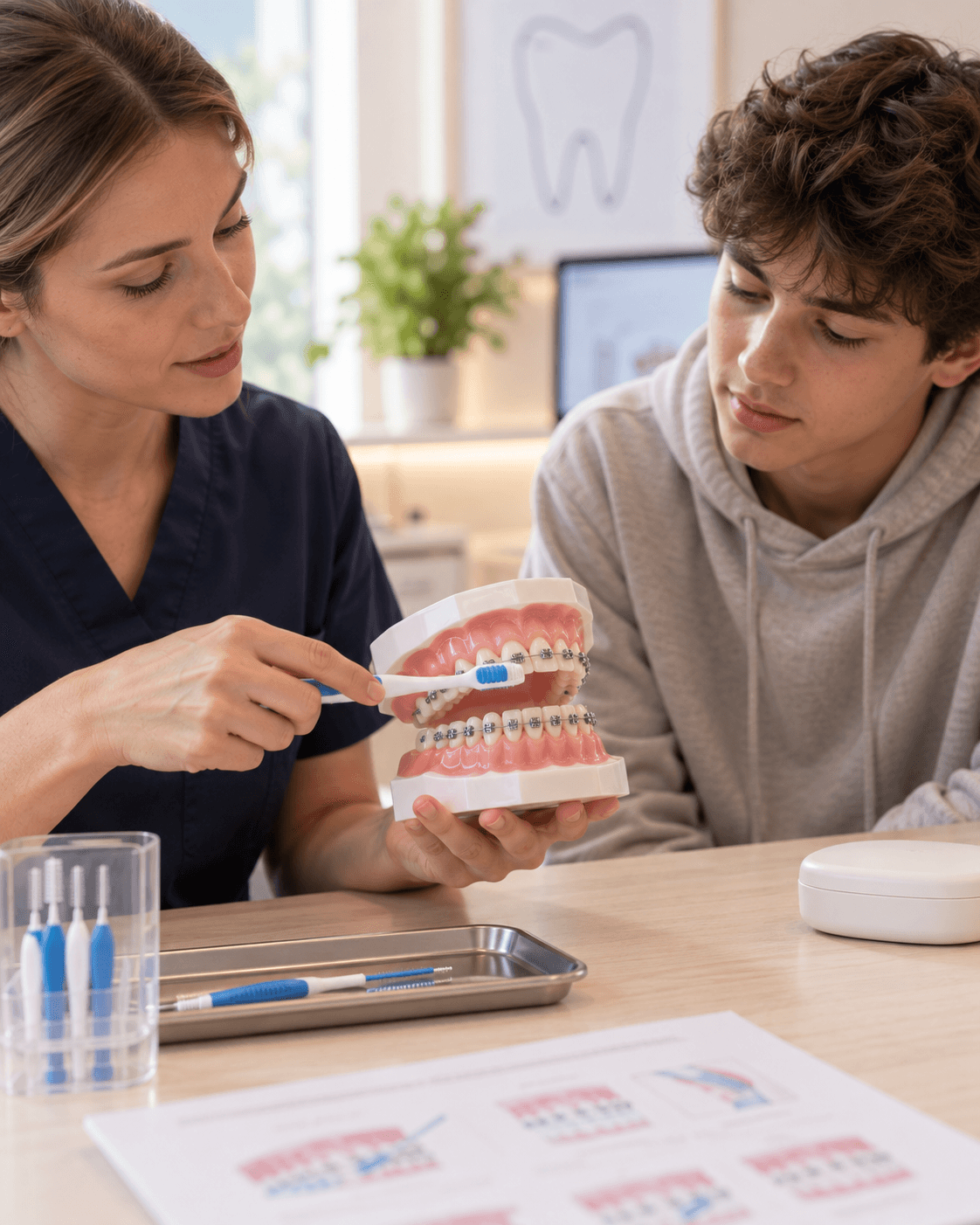
Brackets and wires create extra areas where plaque and food can collect, so brushing technique and regular dental care matter throughout treatment. Cristina demonstrates how to clean around the appliance and explains any useful interdental aids.
Hard or sticky foods can loosen components, and missed orthodontic reviews can delay adjustments. Temporary tenderness after fitting or activation is common; persistent pain, swelling, or a damaged appliance should be reported.
- Brush carefully around attachments and beneath the wires
- Avoid very hard or sticky foods that could damage the appliance
- Contact the clinic if a bracket loosens or a wire irritates
After treatment
Protecting the result
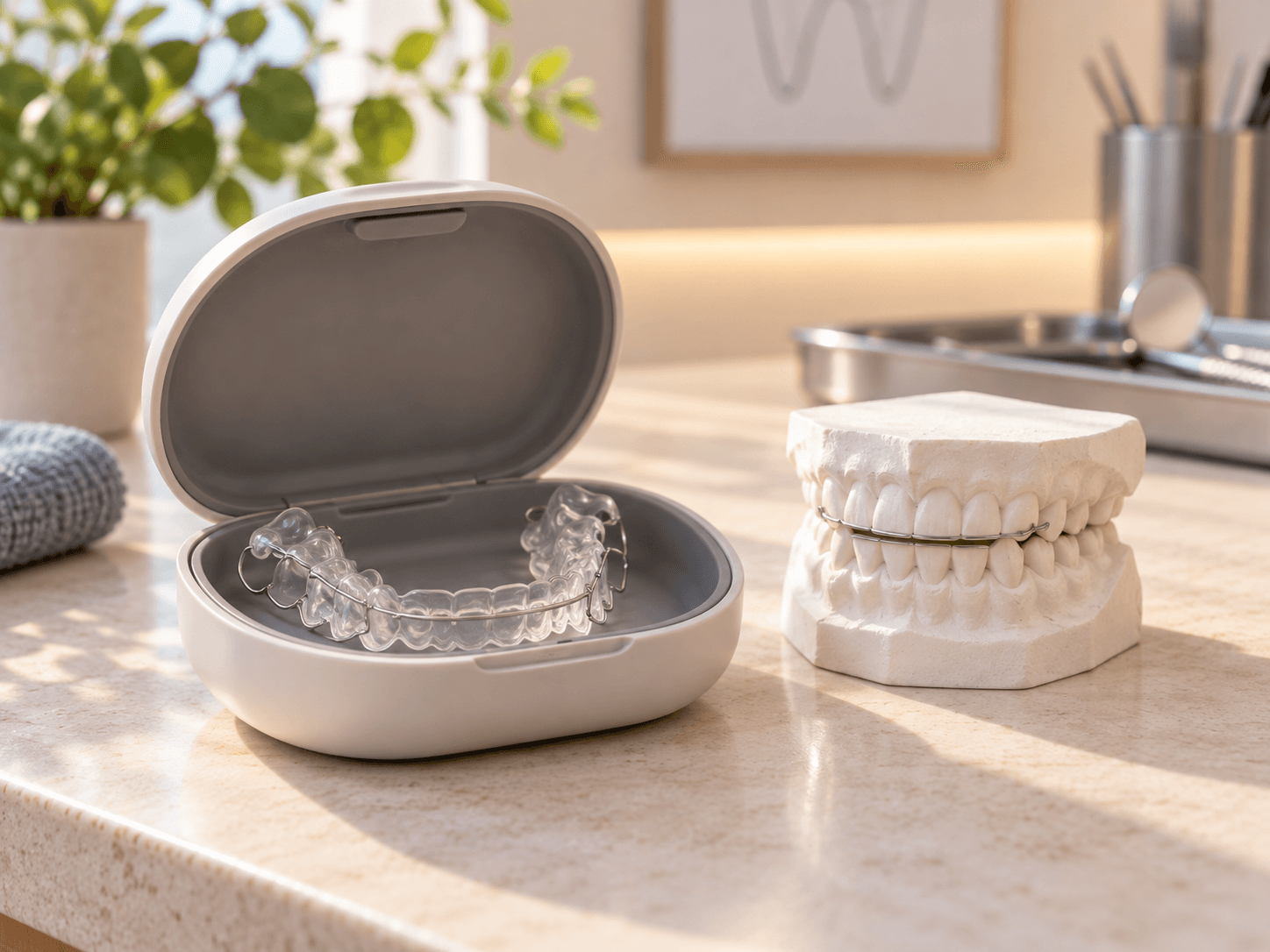
When active movement finishes, the supporting tissues need time to adapt and teeth can continue to shift. Retention therefore forms part of the treatment plan rather than an optional extra.
Cristina explains whether a removable retainer, a bonded retainer, or both are appropriate, how often they should be worn or checked, and what to do if they feel different or become damaged.
- A retention plan tailored to the finished result
- Fit and condition reviewed over time
- Prompt advice if a retainer is lost or no longer fits
Frequently asked questions
What patients ask most often.
General answers, to be refined around your diagnosis.
01Are fixed appliances painful?+
Temporary tenderness can follow fitting or adjustments. Cristina explains comfort measures and when to call.
02What if an attachment comes loose?+
Contact the clinic and describe the problem. Cristina will advise whether an early visit is needed.
The next step
Let’s start by understanding your situation.
A first consultation is time to take stock, answer your questions, and explain the options that may be relevant.