
Clear aligners
A discreet option, planned with precision.
Clear aligners are removable and nearly invisible. Success depends on appropriate indication, rigorous planning, and consistent wear.
Book an appointment
Clear aligners
Clear aligners: who may benefit?
Clear aligners use a planned series of custom removable trays to move teeth gradually. They may suit selected teenagers and adults, from relatively straightforward alignment to some cases requiring advanced planning.
Suitability depends on the bite, the movements required, dental and gum health, and whether the aligners can be worn consistently. Some situations are treated more predictably with fixed appliances or a combined approach.
- Discreet and removable
- Oral hygiene remains accessible
- Regular specialist supervision
- Consistent wear is essential

Everyday life
A treatment that depends on consistency
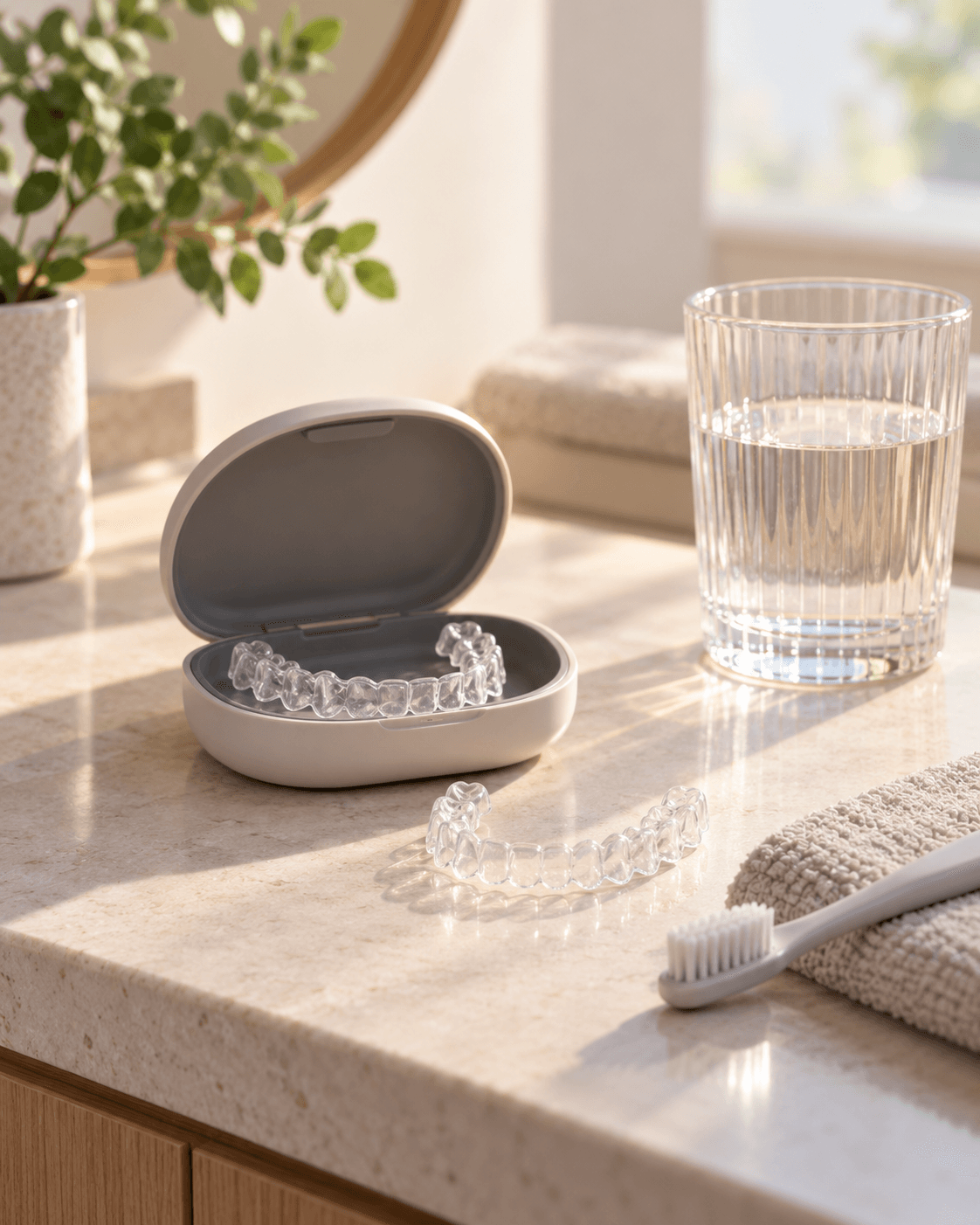
Aligners are normally removed for meals and oral hygiene, then replaced according to the personal wear schedule. Because the appliance only works while it is being worn, missed hours can affect tracking and progress.
Cristina explains when to change each set, how to insert and remove it safely, and what sensations are expected. If a tray cracks, is lost, becomes painful, or stops fitting as expected, contact the clinic before changing the planned sequence.
- Clean the aligners every day as instructed
- Keep them in their case whenever they are not being worn
- Brush before replacing them after meals
Digital planning
Visualisation supports the plan—it does not guarantee it
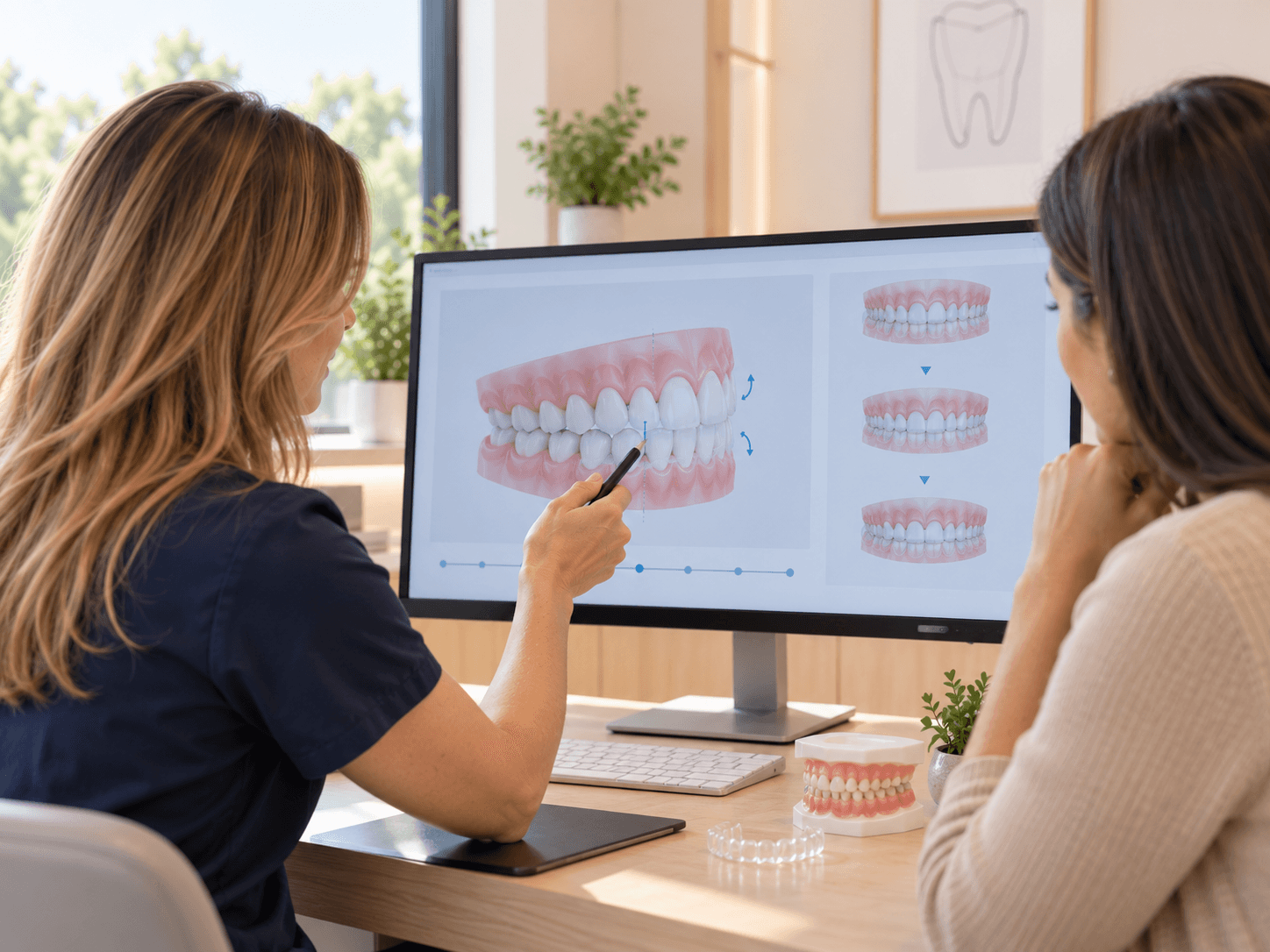
A digital simulation helps Cristina plan the intended sequence and show you the objectives in a concrete way. It can also identify where attachments, elastics, refinements, or another appliance may be needed.
Teeth do not always respond exactly like a screen model. Biology, wear, oral health, and clinical findings are reviewed throughout treatment, and the sequence may be refined when necessary.
- A visual explanation of the planned stages
- Progress checked against the clinical result
- Adjustments made when the response differs from the plan
Frequently asked questions
What patients ask most often.
General answers, to be refined around your diagnosis.
01Will aligners affect my speech?+
A brief adjustment is possible at the start. It is often temporary, but varies from person to person.
02How many hours should I wear them?+
Your prescribed daily wear time is set out in the treatment plan. Consistency is essential for treatment to progress as planned.
03Are aligners suitable for every case?+
No. Only an orthodontic diagnosis can establish whether they are appropriate.
04What should I do if I lose or damage an aligner?+
Contact the clinic before moving to another set or returning to a previous aligner. The right step depends on where you are in treatment.
The next step
Let’s start by understanding your situation.
A first consultation is time to take stock, answer your questions, and explain the options that may be relevant.