
Adult orthodontics
Care that respects everyday life.
There is no single age for considering treatment. Objectives, dental and gum health, desired discretion, and complexity guide the choice.
Book an appointment
Your priorities
Aesthetics, function, and stability
Adult treatment may begin with a wish to improve the smile, make cleaning easier, prepare for restorative work, or address a bite concern. Consultation clarifies what matters to you and which practical constraints—visibility, appointments, work, travel, or maintenance—will shape the plan.
Dental and gum health are assessed before movement begins. Cristina then separates what orthodontics can realistically improve from concerns that may need another type of care.
- Personal goals translated into clinical objectives
- Dental and periodontal health considered first
- Benefits, limitations, and stability discussed

Discreet or fixed adult options
Discreet or fixed options for adult treatment
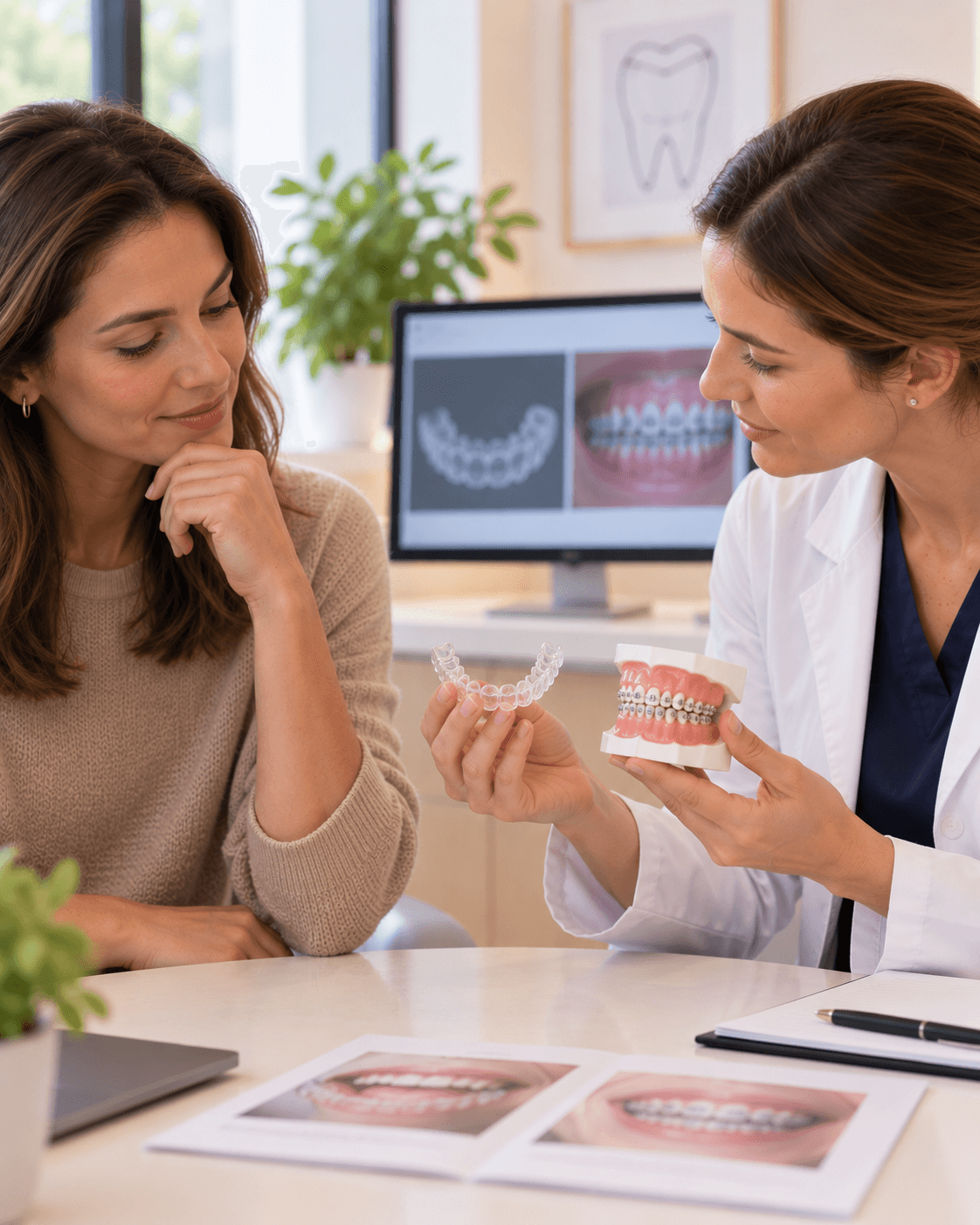
Clear aligners offer a removable and discreet approach when they can produce the required movements and the wear routine is realistic. Fixed appliances provide continuous control and may be preferable for some movements or more complex bite corrections.
Cristina compares the options by clinical predictability, visibility, oral hygiene, food and lifestyle considerations, appointment needs, and the cooperation required. In some plans, more than one appliance type may be used.
- Clear aligners for suitable indications
- Fixed appliances when continuous control is useful
- A recommendation based on diagnosis rather than age alone
Coordination
Planning multidisciplinary care
Some adult plans need to be sequenced with general dentistry, periodontal care, restorative treatment, implant planning, physiotherapy, or maxillofacial input. Orthodontic movement may create space, improve tooth position, or prepare the bite for the next stage.
Before treatment starts, Cristina clarifies who is responsible for each part, which step comes first, and what information needs to be shared. This avoids isolated decisions and helps every professional work toward the same objective.
- Responsibilities and treatment order clarified
- Records shared with the relevant professionals
- Orthodontic objectives connected to the final dental plan

Frequently asked questions
What patients ask most often.
General answers, to be refined around your diagnosis.
01Does adult treatment take longer?+
Duration depends mainly on the diagnosis and objectives. A personal estimate follows assessment.
02Can only a few teeth be treated?+
Sometimes, but a local movement must be assessed within the whole bite and its stability.
The next step
Let’s start by understanding your situation.
A first consultation is time to take stock, answer your questions, and explain the options that may be relevant.